Smart Ring Market: How Oura Survived Apple & Samsung
Are you wondering who will dominate the growing Smart Ring market?
Interestingly, 2024 is the year tech titans finally marched into the Smart Ring market. Samsung officially unveiled the highly anticipated Galaxy Ring. Furthermore, rumors of an impending "Apple Ring" are swirling aggressively. Industry insiders even claim Apple canceled its electric car project to double down on wearables.
When trillion-dollar Goliaths enter the Smart Ring market, typical hardware startups get entirely crushed or quietly acquired.
Yet, a small Finnish startup named Oura Health hasn’t blinked. Instead, they’ve been quietly building in this space for ten years, selling over 1 million rings. Currently, they command a valuation of $2.5 billion.
How did Oura survive in a world dominated by the Apple Watch? Importantly, how did they build an impenetrable "sleep moat"?
Here is the playbook of the ultimate hardware survivor.
<h2>The "Anti-Screen" Positioning</h2>
To understand Oura’s brilliance, you first have to understand the core problem with the reigning king of wearables. The Apple Watch is an incredible piece of technology. However, it harbors a fundamental flaw: it essentially functions as an anxiety machine.
The device buzzes your wrist constantly. Moreover, its bright screen begs for your attention. Users must charge it every single night. Frankly, sleeping with a glowing, bulky computer strapped to your wrist feels incredibly uncomfortable.
Consequently, Oura looked at the Apple Watch and did the exact opposite.
They didn't try to build a "productivity tool." They avoided adding screens, haptic feedback, or notification pop-ups. Rather, they focused heavily on one single, pure value proposition: Invisible sleep tracking.
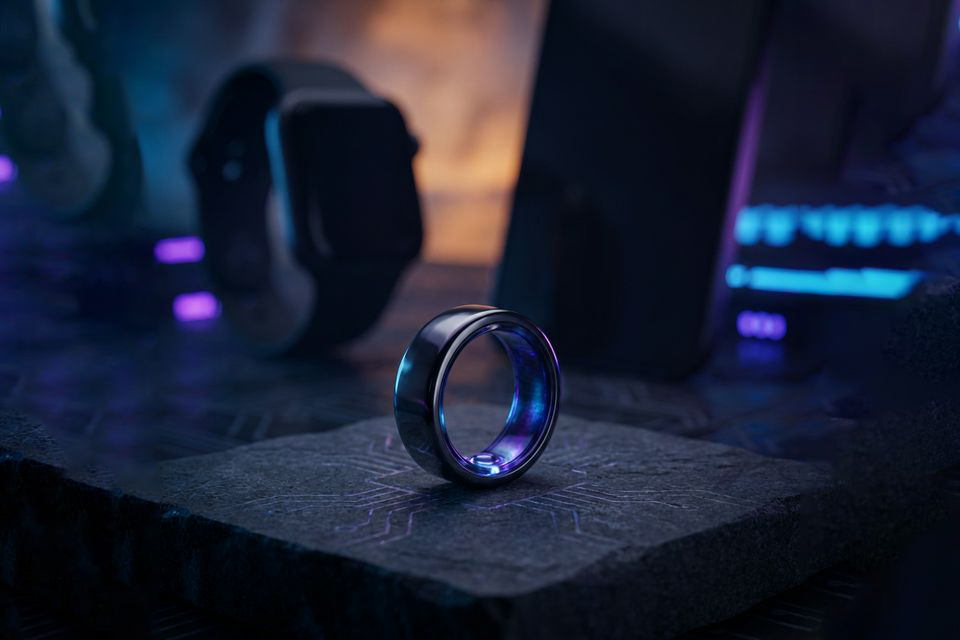
Their product is a beautiful, minimalist ring that looks like standard jewelry. It works completely passively. You wear the device, and it silently collects highly accurate biometric data from the arteries in your finger. Then, you only review the data the next morning on your phone. Best of all, it only requires charging once a week.
Therefore, Oura successfully positioned itself not as another distracting gadget. Instead, it serves as the quiet "antidote" to our over-screened, hyper-connected lives.
<h2>The Influencer Flywheel</h2>
Selling a piece of health tech in the Smart Ring market is notoriously hard. Selling a piece of noticeable jewelry is even harder. Fortunately, Oura knew early on that a smart ring carries massive social currency.
Instead of blowing millions on generic TV commercials, Oura engineered a masterclass in influencer marketing. They successfully got the ring onto the fingers of people who matter most. This included high-performing athletes, silicon valley elites, and global celebrities.
Soon, you couldn't scroll through social media without spotting an Oura Ring. NBA superstar Chris Paul wore one. Additionally, Twitter founder Jack Dorsey swore by his. Kim Kardashian and even Prince Harry were photographed wearing the distinctive, minimalist band.
Crucially, this wasn't just product placement. It was identity creation.
When these ultra-successful figures wore the ring, it stopped being a simple "fitness tracker." It transformed into a powerful status symbol. Wearing an Oura Ring subtly signaled to the world: "I am disciplined, and I care deeply about my longevity." Ultimately, this created a viral, top-down flywheel that no traditional advertising campaign could ever buy.
<h2>The Controversial Masterstroke (Hardware as SaaS)</h2>
If the influencer strategy convinced people to buy the ring, their next move ensured the company's long-term survival. However, it was met with fierce backlash.
When Oura released the Generation 3 ring, they executed an incredibly bold pivot. Specifically, they introduced a mandatory $5.99 monthly subscription fee.
Tech reviewers were furious. Meanwhile, early adopters screamed betrayal. Consumers wondered why they should pay a monthly rent just to see their own data after buying a $300 piece of titanium hardware. Without the subscription, the ring effectively reduced to an expensive, useless piece of metal.
But from a purely clinical business perspective? It was a genius survival strategy.
Here is the harsh reality of the hardware business. Selling a physical gadget represents a terrible, low-margin, one-time transaction. Apple and Samsung can afford to sell hardware because their ultimate goal involves locking you into their massive smartphone ecosystems.
Conversely, Oura doesn't sell a phone. They only sell the ring. If they only charged once for the hardware, they would rapidly run out of cash to pay their world-class software engineers.
By transitioning to a SaaS (Software as a Service) model, Oura unlocked continuous, predictable, recurring revenue. This cash flow allowed them to invest heavily in what actually matters: The Algorithm.
Because of that subscription money, Oura's software became exponentially smarter than its competitors' tools. They independently developed incredibly accurate illness detection capabilities. Furthermore, they created industry-leading cardiovascular age tracking and highly integrated female reproductive health features.
Ultimately, the subscription didn't just save their business. It funded the deepest, most accurate health moat in the industry.
<h2>Can David Survive Goliath?</h2>
As Samsung unleashes the Galaxy Ring, the true test for Oura begins. Notably, Samsung is marketing its device WITHOUT a subscription fee.
Will the masses abandon Oura's $5.99 monthly fee for a one-time purchase from a tech giant? Perhaps some consumers certainly will.
Nevertheless, Oura’s ultimate defense is no longer just the titanium band. Their moat revolves around ten years of extremely high-quality, longitudinal human sleep data. Additionally, it relies on their premium, luxury brand positioning. This is clearly evidenced by their collaboration with Gucci. Finally, it depends on the trust of a cult-like community that views Oura as a dedicated health companion within the growing Smart Ring market.
Samsung and Apple are fighting a war for your wrist. By quietly retreating to the finger and charging a premium to fund the best algorithms in the world, Oura has proven a vital lesson. Sometimes, the best way to fight a giant is to refuse to play their game.
<h3>Over to You</h3>
If you were entering the Smart Ring market today, would you choose the seamless integration of a tech giant like Apple, or the laser-focused expertise of a niche player like Oura? Let us know in the comments below!
(For another example of a lean startup dominating its space without VC money, read our Midjourney Business Case Study).